AWS Network Security Director
Case study: Penne aka Network Security Director
I led design and research for Amazon's Perimeter Protection organization, focused on helping customers understand and secure their entire cloud security portfolio. When I joined the team, I was the sole designer supporting the organization.
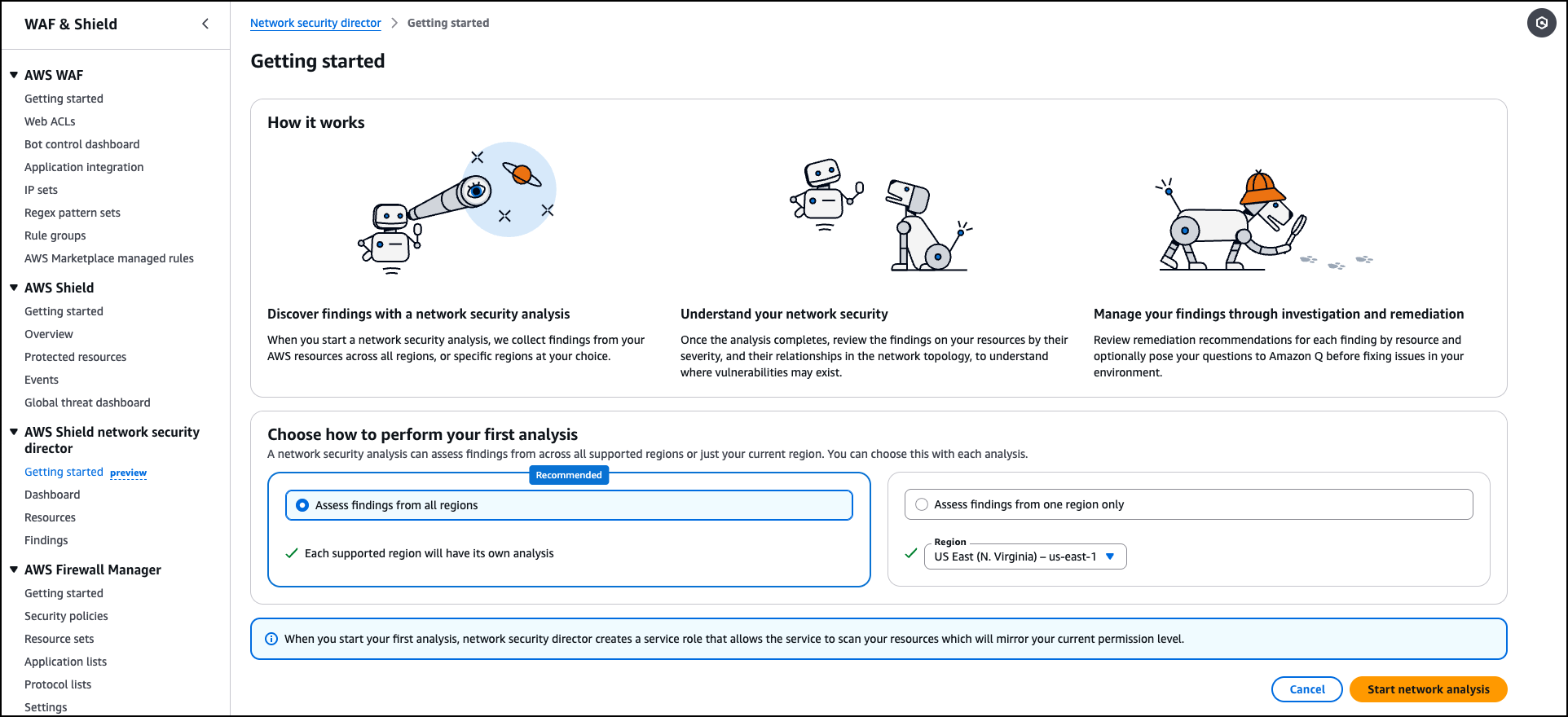
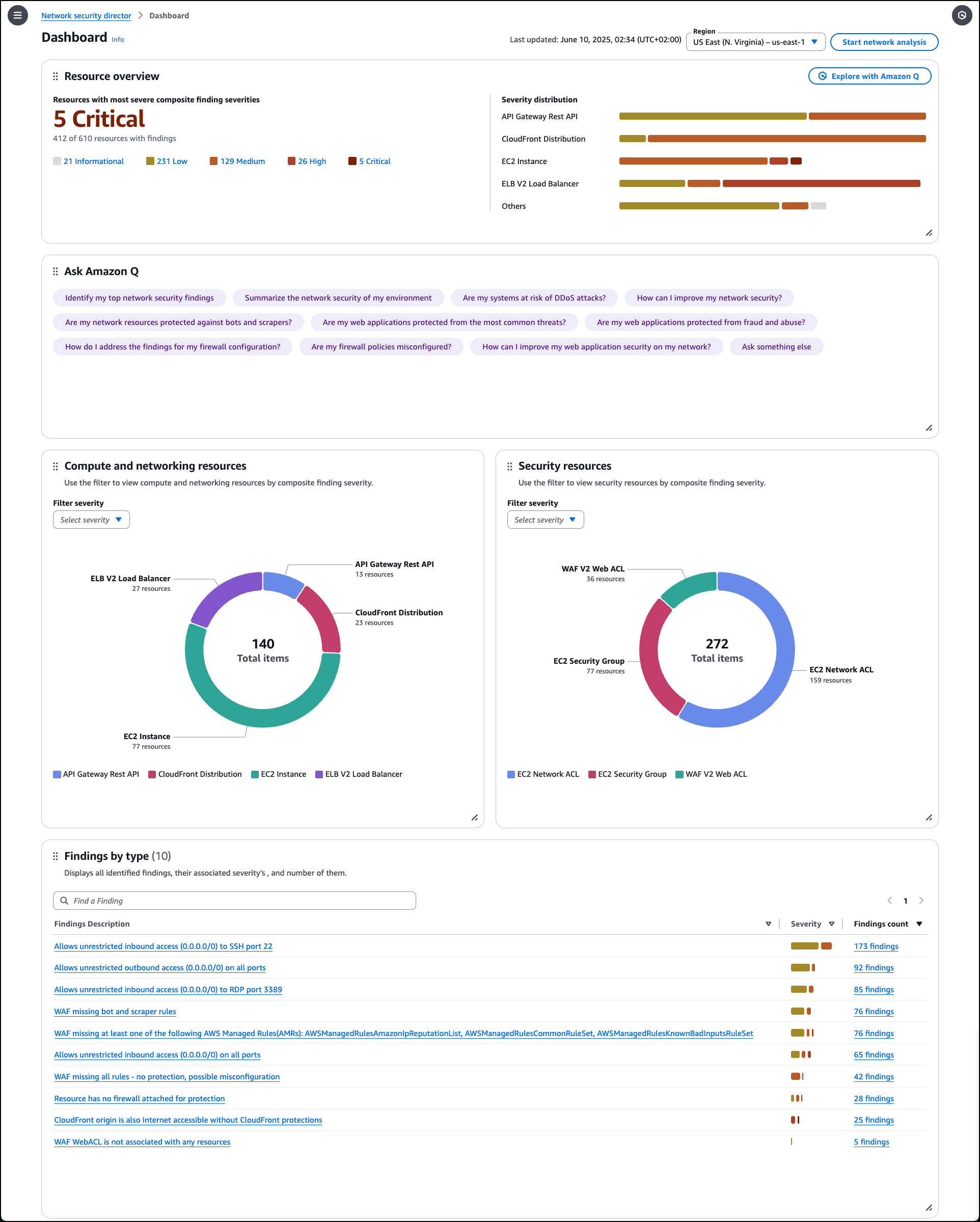
The vision for the product was ambitious: leverage AI to analyze customer AWS environments, inventory every cloud resource, understand the traffic each resource encountered, identify the protections already in place, and surface gaps across the customer's security posture. From this holistic view, we could recommend targeted security improvements, enable automated remediation, provide AI-powered investigations through Amazon Q, and proactively alert customers to emerging threats by correlating global security intelligence.
This was the first project I worked on after joining Perimeter Protection, and I was immediately immersed in one of the team's biggest challenges. Product and Engineering were in the middle of two weeks of all-day alignment sessions, struggling to establish a shared vision for the product. During my first few days, I observed that although both teams appeared to agree during discussions, they were often using different terminology and leaving meetings with entirely different interpretations of the same concepts.
A few days into the workshops, I asked our Director, Kavitha, if I could try a different approach. As Product described customer needs and Engineering discussed technical constraints, I rapidly translated the conversations into interface concepts in real time. Although the designs were intentionally rough, they gave everyone a shared visual language. Discussions that had previously stalled became productive because both teams could finally react to the same representation instead of abstract ideas. That shift significantly accelerated alignment and became the working model for the remainder of the project.
Following those sessions, I partnered closely with Product and Engineering over the next six weeks to redefine the product experience. We conducted customer research three times per week, continuously validating workflows, feature prioritization, and usability to identify deal breakers before development. Together, the Product Manager and I synthesized customer findings into detailed analyses that guided prioritization decisions as engineering inevitably reduced scope to meet launch timelines.
Once the product architecture was established, I expanded beyond traditional design responsibilities by creating a comprehensive requirements document, including epics, user stories, and acceptance criteria. Engineering had only six weeks to build a substantial new product in time for AWS reInvent 2024, and our product team was supporting several major initiatives simultaneously. By producing detailed implementation guidance, I helped ensure Engineering understood both the customer intent behind each feature and the long-term product vision. The documentation also became a living planning tool, allowing Product and Engineering to collaboratively prioritize work and estimate delivery timelines.
Another significant challenge involved unifying data across numerous AWS Security organizations. Each organization used different terminology to describe security risks, findings, and recommended customer actions, creating an inconsistent customer experience.
To address this, I established a weekly cross-organizational working group with documentation teams, and designers. I also partnered with Principal Engineers across AWS Security to understand industry standards, internal best practices, and the expectations of experienced security professionals. Together, we developed aligned terminology and standardized risk definitions. This work enabled us to present a unified recommendation to senior leadership and began the broader effort to standardize security language across AWS documentation and the management console.
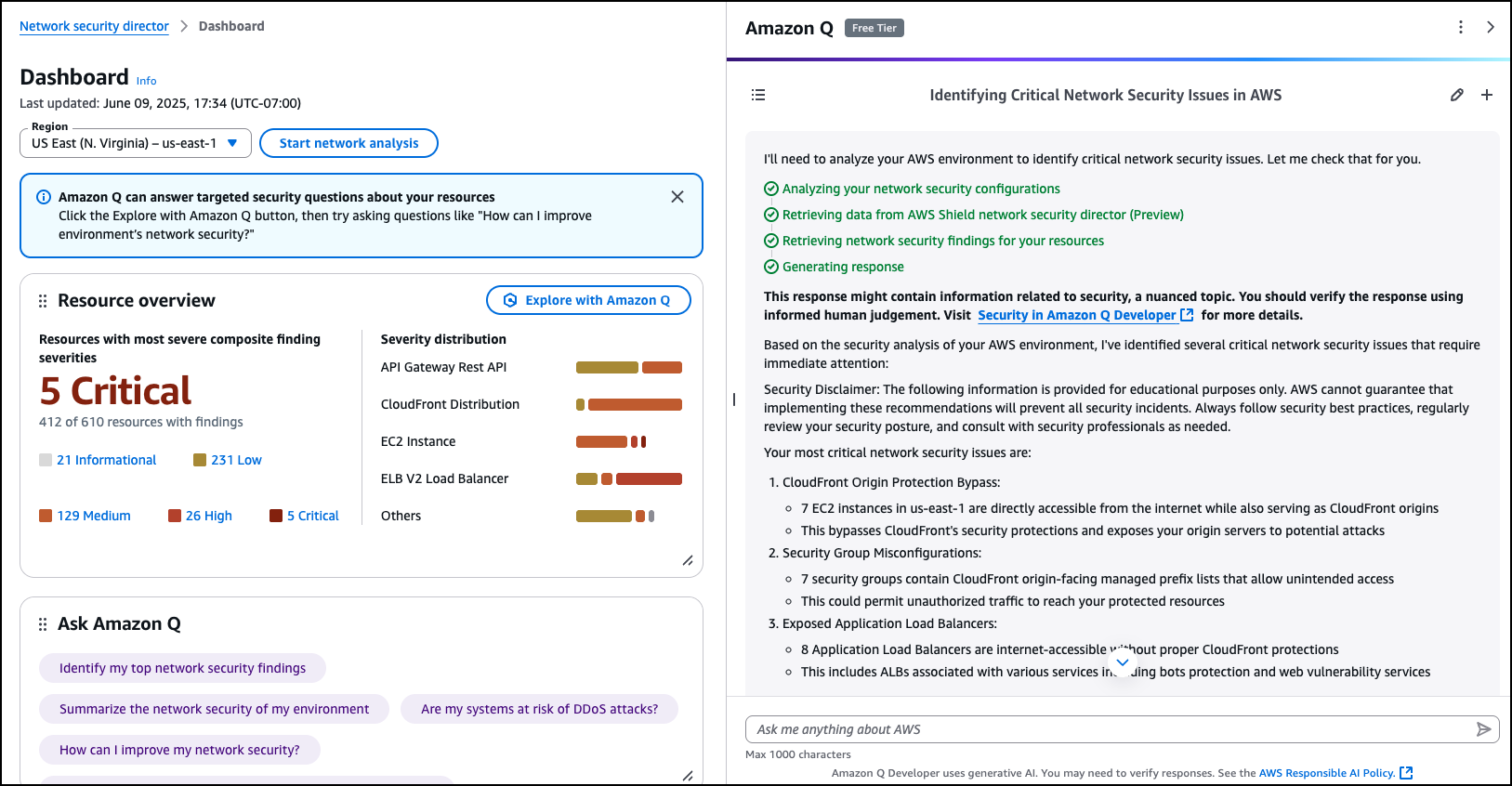
In parallel with the console experience, I partnered with our Applied Scientists to design the conversational experience for Amazon Q. It was essential that customers could seamlessly transition between the content on the console and the AI assistant while maintaining confidence that both reflected the same underlying data.
Customer research revealed that many users were initially hesitant to interact with an AI assistant because they didn't know what questions to ask or if the data was accurate. To reduce this friction, I designed guided conversation starters that encouraged exploration and helped customers quickly understand the value of the system. As customers engaged with the suggested prompts, they became more comfortable asking increasingly complex questions and began incorporating the experience into their security workflows.
I also collaborated closely with the Applied Science team to refine the prompting experience itself. I reviewed and restructured more than 100 prompt-and-response pairs, simplifying technical language, improving readability, and establishing patterns that better reflected how customers naturally communicate with conversational AI.
In the final month leading up to AWS reInvent 2024, the team participated in weekly executive reviews with multiple Security SVPs to gain alignment across AWS Security organizations. Product decisions were regularly challenged, priorities shifted, and new requirements emerged throughout the review process. By grounding our recommendations in customer research, we were able to defend critical design decisions and push back on changes that we knew would negatively impact customers.
The product successfully launched as a private preview at AWS reInvent 2024, onboarding its first cohort of customers and establishing the foundation for an AI-powered cloud security management experience.